Russell Brand is alive.
Dan Bongino posted an ambiguous tribute to Charlie Kirk on March 10, 2026 — featuring a photo prominently showing Brand — with no name in the caption. X user @JacksonClarke misidentified Brand as the deceased, triggering a cascade that reached millions and spawned a Facebook "R.I.P." page with nearly one million likes. Brand shut it down the next morning with characteristic dry wit: "I actually feel quite well. Not suicidal, FYI."
Russell Brand is alive. On March 10, 2026, conservative commentator and former FBI Deputy Director Dan Bongino posted a tribute message on X accompanied by a photo from a podcast recording that showed both Brand and the late Charlie Kirk. The caption — "There won't be another. One of the saddest days of my life. He was just different. And everyone who knew him, knew it. May God rest your soul." — named no one. [1] Because Brand appeared prominently in the foreground of the photo while Kirk was positioned to the side, thousands of users interpreted the post as announcing Brand's death, not Kirk's. [2]
The hoax did not require fabrication. It was structurally generated by three conditions: a grief-coded caption, visual prominence of the wrong subject, and the complete absence of an explicit name. [4] Bongino's X account commands over 7 million followers. [5] Platform algorithms rewarded the emotional engagement, and the ambiguity was resolved — incorrectly — by the first users to reply, whose interpretations set the default frame for subsequent shares. This is a textbook example of what researchers call a "structural hoax": no coordinated clickfarm or disinformation actor was needed; the architecture of a single ambiguous post from a high-reach account was sufficient.
Brand himself shut down the rumor on March 11, posting on X: "I actually feel quite well. Not suicidal, FYI." [6] Brand is currently facing trial at Southwark Crown Court on multiple counts of rape and sexual assault, scheduled to begin June 16, 2026; his controversial legal and political status contributed to why the hoax spread so readily. [7][8]
1. The Claim
On the evening of March 10, 2026, "Russell Brand dead," "RIP Russell Brand," and variants began trending across X and spreading into Facebook. The claim had no official source — no hospital statement, no family announcement, no publicist release. It was assembled entirely from social inference.
Within hours, dedicated debunk articles were being published by TMZ, Newsweek, the Washington Times, Distractify, Primetimer, IBTimes UK, Reality Tea, Yahoo Entertainment, and international outlets including Geo.tv (Pakistan) and CrispNG (Nigeria). [11][12][14] The speed of the debunk cycle was itself evidence of scale — fact-checkers don't mobilize for rumors that haven't reached critical mass.
Verdict: FALSE. Russell Brand is alive. The claim originated from a misidentification of Dan Bongino's tribute post to the late Charlie Kirk. No official death announcement was ever issued by Brand's representatives, family, any law enforcement agency, or any credible news organization.
2. What Actually Happened: The Bongino Post
The triggering event was a post on X by Dan Bongino, published March 10, 2026, at 4:33 p.m. Eastern Time. Bongino had served as FBI Deputy Director from 2025 until January 3, 2026, and returned to podcasting with Rumble in February 2026. At the time of the post, he had over 7 million followers on X. [5]
The post contained a photo from a podcast recording featuring both Brand and Charlie Kirk seated together, with Brand visually prominent in the frame. The accompanying caption was purely emotional tribute language with no explicit identification: "There won't be another. One of the saddest days of my life. He was just different. And everyone who knew him, knew it. May God rest your soul." [1]
The tribute was for Charlie Kirk, the Turning Point USA co-founder who was assassinated on September 10, 2025, at Utah Valley University in Orem, Utah. [9] Bongino's tribute landed on the six-month anniversary of Kirk's killing — as FBI Deputy Director at the time of Kirk's death, Bongino had personally overseen the federal investigation and had spoken of Kirk as a close personal friend. The grief was genuine. The omission of a name was a product of emotional expression, not negligence. [3]
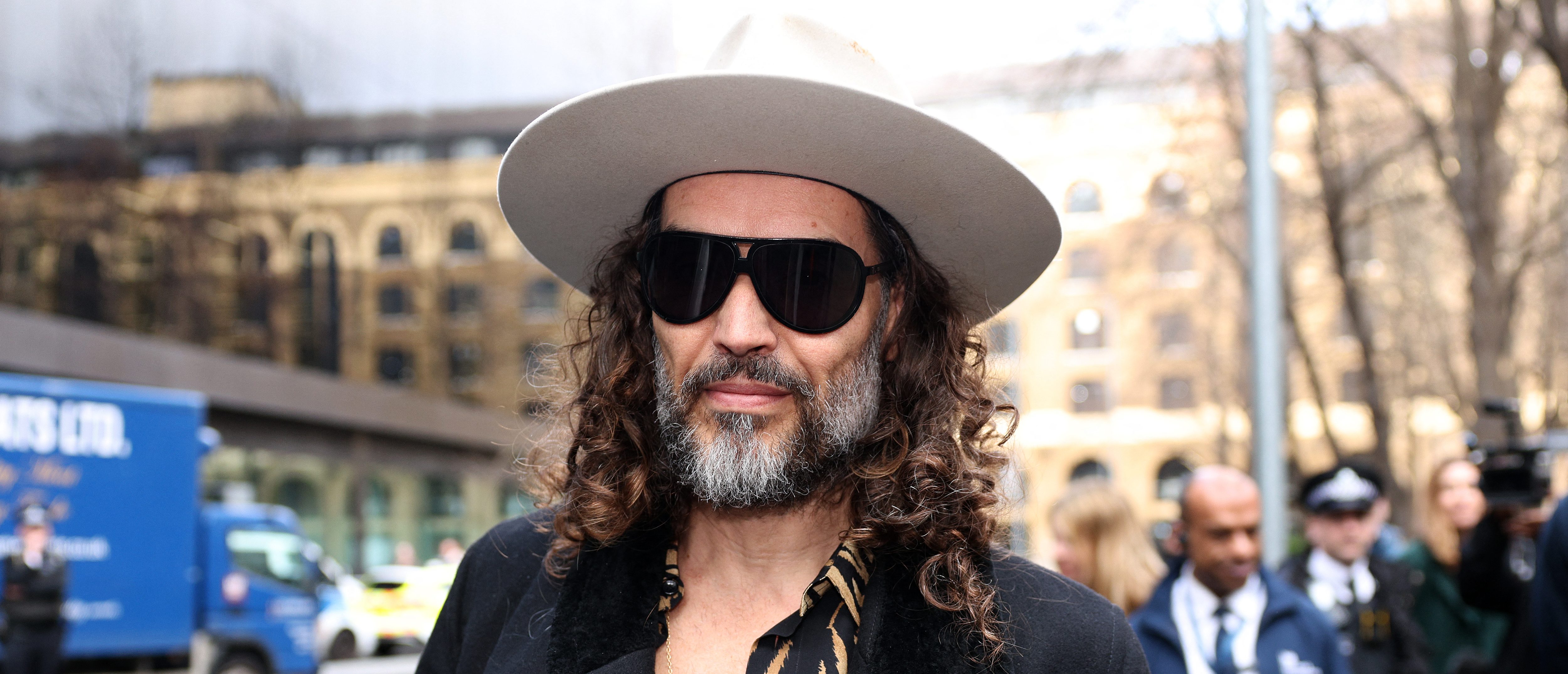
The problem: to audiences unfamiliar with the Kirk assassination context, or encountering the post without that background, the prominent figure in the foreground of the photo — Russell Brand, more recognizable to general audiences than the conservative-media figure Kirk — became the apparent subject of the obituary.
3. The Spread: From Single Post to a Million Likes
At 7:41 p.m. on March 10 — three hours and eight minutes after Bongino posted — an X user named @JacksonClarke responded to the original post with: "I can't believe this is how I found out Russell Brand is dead," retweeting the original. [3] This single reply did something the original post had not: it provided an explicit name. Once a named interpretation existed, it became the default context for subsequent shares.
The cascade mechanics were straightforward. Users who encountered the @JacksonClarke retweet had no reason to doubt the framing — it was presented as the reaction of someone who had just learned devastating news, not as a question or speculation. The emotional register of the retweet matched the emotional register of the original post, reinforcing rather than interrogating the misidentification.
A concurrent secondary wave originated on Facebook, where a dedicated "R.I.P. Russell Brand" page accumulated nearly one million likes before fact-checkers intervened. [10] Notably, the Facebook page reportedly began accumulating likes on March 9 — one day before the Bongino post. This suggests either an entirely independent origin event, or a recycled/pre-positioned engagement-bait page that was activated once the X cascade provided cover. Research does not resolve this ambiguity definitively, and it should be treated as an open question. [13]
| Date / Time | Event | Source |
|---|---|---|
| Sep 10, 2025 | Charlie Kirk assassinated at Utah Valley University by rooftop gunman Tyler James Robinson | [9] |
| Jul 2024 | Russell Brand attends Turning Point USA event; photo with Kirk taken at Republican National Convention | [15] |
| Feb 24, 2026 | Brand appears at Southwark Crown Court; pleads not guilty to new rape and sexual assault charges; trial set June 2026 | [8] |
| Mar 9, 2026 | Facebook "R.I.P. Russell Brand" page begins accumulating likes; reportedly reaches nearly one million likes | [10] |
| Mar 10, 2026, 4:33 p.m. ET | Dan Bongino posts ambiguous Charlie Kirk tribute on X; Brand prominently featured in photo; no name in caption | [1] |
| Mar 10, 2026, 7:41 p.m. ET | @JacksonClarke replies: "I can't believe this is how I found out Russell Brand is dead" — first explicit misidentification on record | [3] |
| Mar 10, 2026, evening | Rumor cascades across X and Facebook; "Russell Brand dead" trends | — |
| Mar 11, 2026 | Brand posts on X: "I actually feel quite well. Not suicidal, FYI." Ten+ outlets publish debunks | [6] |
4. Brand's Response: "I Actually Feel Quite Well. Not Suicidal, FYI."
On March 11, 2026, Russell Brand posted on X: "I actually feel quite well. Not suicidal, FYI." [6] TMZ, Primetimer, Yahoo Entertainment, and Reality Tea all incorporated the exact quote as the primary debunk anchor in their articles.
The response is notable for several reasons beyond simple confirmation of life. The phrase "Not suicidal, FYI" directly addressed a secondary speculation track that commonly follows celebrity death hoaxes — particularly for controversial figures with active legal pressures. Brand was simultaneously managing a pending rape trial with a June 2026 start date, a February 2026 court appearance, and active public hostility from one segment of his audience. For that context, a death by suicide was a psychologically plausible secondary narrative. Brand preemptively closed it down before it could generate its own cycle.
The dry, darkly wry register is consistent with Brand's well-established public voice — casual, ironic, unrattled. This made the post inherently quotable and shareable as its own media moment, and the brevity ensured it circulated as a screenshot rather than requiring engagement with a longer statement. The ironic tone also served a defensive function: making light of the situation signals psychological stability and denies the hoax the gravitas it needs to sustain secondary speculation.
By posting personally and quickly, Brand also minimized the duration during which family members and close associates might be uncertain — a factor often overlooked when measuring the harm of celebrity death hoaxes. Jeff Goldblum, a repeat death hoax target, has noted the toll on family: "When a gazillion people you've never met tell you that you're dead, it's bad when you're severely clinically depressed." [25] Brand's response strategy, however imperfect, was operationally effective.
5. Evidence Deep-Dive: Claims vs. Reality
| Claim Circulated | Reality | Evidence |
|---|---|---|
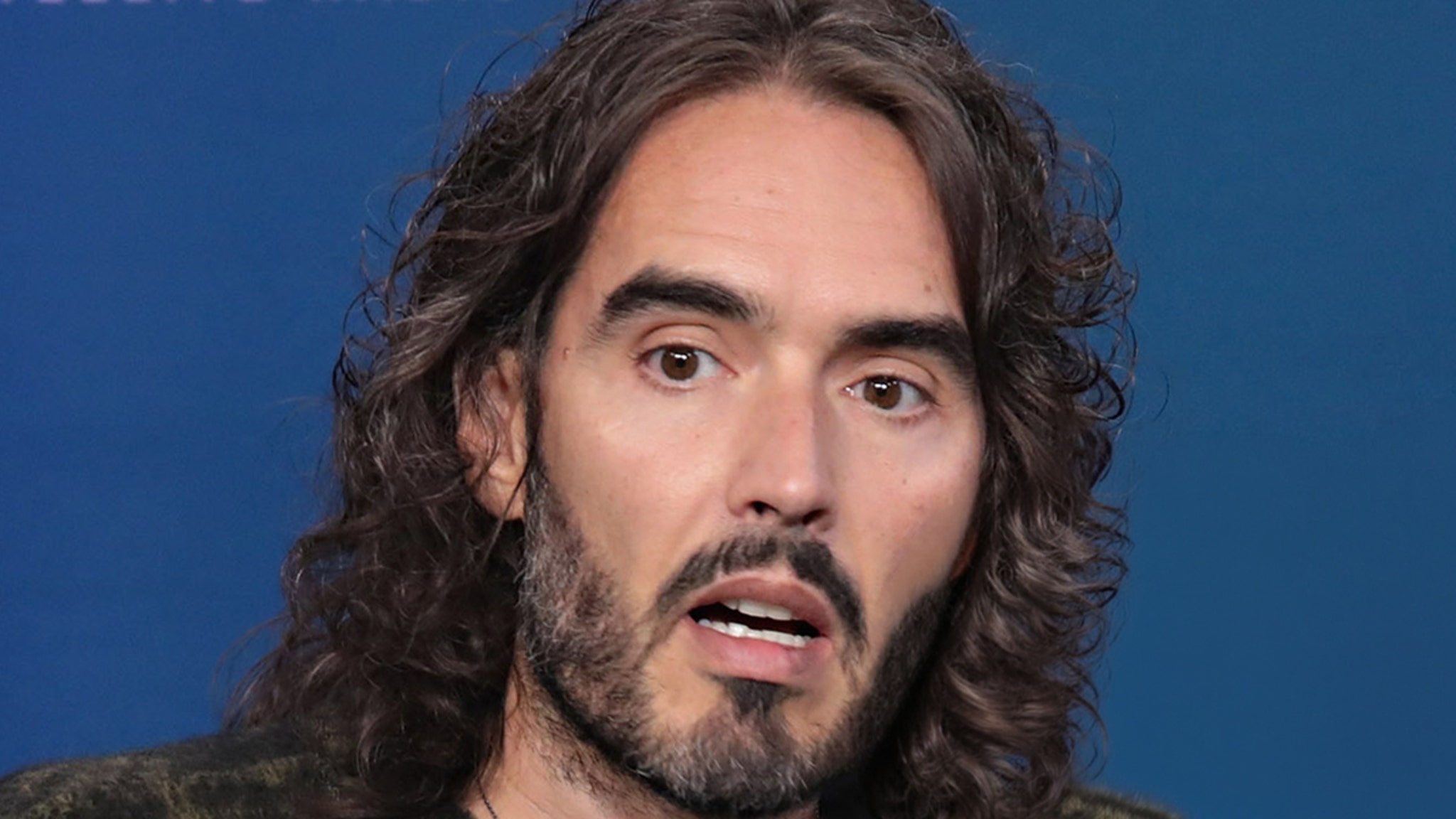
| "Russell Brand has died" / "RIP Russell Brand" | Brand is alive; confirmed by his own X post on March 11, 2026 | Brand's post: "I actually feel quite well. Not suicidal, FYI." [6] |
| Dan Bongino's tribute post was about Russell Brand | The tribute was for Charlie Kirk, assassinated September 10, 2025 | Multiple outlets confirmed via context; Bongino's photo included Kirk [1][2] |
| Brand's death was connected to his legal/mental health situation | Brand is alive; the legal case is ongoing with trial set for June 16, 2026 | Deadline, Al Jazeera, Variety coverage of Brand's 2026 court appearances [7][8][18] |
| The "R.I.P. Russell Brand" Facebook page represented a genuine announcement | Engagement-bait page consistent with celebrity death hoax clickfarm pattern; no official confirmation ever existed | AAP FactCheck analysis of celebrity death hoax page mechanics [13] |
How the Facebook RIP Page Works
The "R.I.P. Russell Brand" Facebook page that accumulated approximately one million likes is consistent with a well-documented category of engagement-bait infrastructure. Celebrity death hoax pages on Facebook operate through a two-stage model documented by CBS News and ABC7. [19][20]
Stage 1 (Engagement harvest): The RIP post or page drives emotional reactions — likes, comments, shares — that the algorithm interprets as high-value engagement, amplifying reach organically at no cost. Stage 2 (Monetization): External link clicks drive ad revenue on clickbait destination sites, or redirect to phishing pages harvesting credentials. The "Look Who Died" scam variant documented by ABC7 spreads specifically via Facebook DM, downloading malware on click. [20]
Dr. Agata Stepnik, digital communications researcher, has confirmed this pipeline: "Following the link usually takes the user to a phishing webpage, where they can then be set up to be scammed or defrauded." [13]
Celebrity Death Hoax Precedent Table
| Celebrity | Year(s) | Mechanism | Notable Detail |
|---|---|---|---|
| Morgan Freeman | 2010, recurring to 2024 | Twitter/Facebook fabrication | First major viral Twitter death hoax; prefaced with fake "RT CNN" attribution [24] |
| Jackie Chan | Recurring; Nov 2025 most recent | AI-generated imagery + fabricated quotes | Made Chan #1 Google entertainment trend on Nov 10, 2025; ~25K likes, 30K shares on single post [17] |
| Jeff Goldblum | Multiple | Satirical site content taken out of context | His own mother called him in tears after seeing a hoax [25] |
| Kylie Jenner | Prior case | Facebook RIP page | Documented by AAP FactCheck; page reached approx. one million likes [16] |
| Simon Cowell | 2025 | Composite image with coffin | Texas car crash photo repurposed; tens of millions of views [16] |
| Jason Statham | 2025 | "Celebrity Cars" / "Buzz Network" page | Composite coffin image; part of multi-celebrity clickfarm operation [16] |
| Russell Brand | Mar 2026 | Structural ambiguity (no fabrication required) | Authentic post from 7M-follower account; no coordinated actor needed; Facebook RIP page ~1M likes |
6. Why Russell Brand Is Uniquely Hoax-Prone
Russell Brand sits at an unusually high-vulnerability position for death hoaxes because he generates simultaneous intense emotional responses across opposite audiences — a dual-audience trap that very few public figures occupy.
Audience A (hostile): Feminist, liberal, and #MeToo-aligned audiences who view Brand's pending rape trial as long-overdue accountability. For this audience, a death hoax carries plausibility as a "tabloid ending" for a figure they see as morally condemned. The reaction pattern is shares and engagement driven by moral outrage. Research published in PMC (2025) found posts framed as moral debates generate 63 percent more engagement than informational or humorous content. [28]
Audience B (supportive): MAGA-adjacent, Christian-conservative, and anti-establishment audiences for whom Brand's political pivot — from eco-socialist provocateur to attendee at the 2024 Republican National Convention and close associate of figures including Tucker Carlson, Candace Owens, Ben Shapiro, and Jordan Peterson — has made him a trusted voice. [26] For this audience, Brand's connections to Charlie Kirk created a plausible shared-photo context that amplified the Bongino misidentification. His baptism in April 2024 and attendance at Turning Point USA events alongside Kirk [15] meant the two men in the photo were not strangers — they had a documented relationship.
Salon (April 2025) described Brand's situation as "the devil's bargain between MAGA and 'Christian' celebrities" — his adoption by conservative Christian politics created a parasocial bond with a high-sharing audience that would be emotionally primed to engage rapidly with content about him. [26]
His trial timeline (set June 16, 2026, Southwark Crown Court; expected to last 4–5 weeks) further elevates his news-cycle salience. [7] Brand faces seven total counts involving six separate women — two counts of rape (alleged 1999–2005), one count of indecent assault, two counts of sexual assault (1999–2005), one count of rape (2009, London), and one count of sexual assault (2009, London). [8][18] Notably, a case management hearing to determine whether Brand's new February 2026 charges would be joined to his June trial occurred in the same week the death hoax emerged — meaning Brand was simultaneously in active legal proceedings at the exact moment the rumor spread, directly lowering the implausibility threshold for dramatic claims.
7. How Death Hoaxes Feed Engagement Algorithms
The mechanics of why death hoaxes spread so effectively are well-documented at both the academic and platform level.
The grief-to-clicks pipeline: Death news generates shock and grief — emotions that reliably drive commenting, sharing, and extended dwell time. Research published in ScienceDirect (2025) found that anger expression in tweets corresponded to a six-fold increase in retweets per 0.1-unit increase in anger score. [27] Grief operates analogously — it creates urgency that overrides verification behavior. Users share to process the news, not to confirm it.
Moral outrage amplifier: Posts framed as moral debates generate 63 percent more engagement than informational or humorous content. [28] Celebrity death hoaxes for controversial figures like Brand are inherently framed as moral content — triggering audience judgments about justice, karma, or persecution simultaneously with the grief response. Both hostile and sympathetic audiences engage heavily, for opposite emotional reasons.
The feedback loop: Once the algorithm detects high engagement, it amplifies distribution, which generates more engagement. The correction ("he is alive") generates its own wave of engagement — "Russell Brand is actually alive" as a headline produces nearly as much click incentive as the original claim. Platforms profit from both the hoax and the debunk. Digital communications researcher Andrea Carson summarized the underlying driver: "It tends to be for eyeballs that these falsehoods are generated and what more likely way to do so than to focus on a made-up but shocking story about a celebrity." [16]
8. The Platform Problem: Who Was Watching?
No evidence emerged from research that X applied any content label or Community Notes flag to the viral hoax posts during the active spread window on March 10–11, 2026. The X Community Notes system, which replaced formal fact-checking, depends on community consensus before labels appear — and research confirms this process is structurally too slow to reduce engagement during the early viral phase. [21]
On Facebook, Meta's January 2025 elimination of third-party fact-checking under its US policy shift [22] means no formal label would have been applied to the RIP page under the new framework. FactCheckHub specifically warned after the policy change that it would reduce protection against celebrity death hoax pages before they accumulate engagement-bait momentum — and cited a Mike Tyson death hoax in January 2025 that continued circulating uncorrected into February 2025 under the new Community Notes system. [21] The Brand Facebook page appears to have been identified and removed only after the broader debunk cycle reached critical mass on March 11.
Meta simultaneously removed fact-checking protections while creating financial incentives for viral content — ProPublica documented these directly conflicting objectives. [23]
| Platform | Policy as of 2026 | Effect on Brand Hoax |
|---|---|---|
| X (Twitter) | Community Notes only; no dedicated false death claim policy | No labels applied during active spread on March 10–11 |
| Facebook / Meta | Community Notes (replacing 3PFC eliminated January 2025) | No formal label applied; RIP page removed/labeled only after debunk critical mass |
| YouTube | Classifies celebrity-death claims as high-risk; holds for corroboration by trusted sources | Not a significant vector in this case |
| TikTok | No specific celebrity death hoax policy documented | Secondary spread via TikTok reaction videos reported; not primary vector |
The timeline of platform moderation capacity tells the wider story. Facebook's third-party fact-checkers were at full capacity in 2020. X's Community Notes launched in limited rollout in 2022. In 2023, Brand's YouTube channel was demonetized following assault allegations, driving him to Rumble. In January 2025, Meta eliminated US third-party fact-checking. In November 2025, the Jackie Chan AI-generated death hoax went viral on Facebook with no fact-checker labels applied. [17] In March 2026, the Brand hoax spread for six-plus hours without any platform intervention. Each step in this timeline is a reduction in structural moderation capacity at the moment the Brand hoax emerged.
9. Conclusion: The Structural Hoax Is the Most Dangerous Kind
The Russell Brand death hoax of March 2026 required no fabrication, no clickfarm coordination at the ignition stage, and no state-sponsored disinformation network. It was generated entirely by three elements: a grief-coded caption from a 7-million-follower account, a photo where the wrong person was visually prominent, and the absence of a name. [4]
This is what makes structural hoaxes — as distinct from fabricated hoaxes — particularly difficult to defend against. A fabricated death claim can be debunked by establishing that no event occurred. A structural hoax bootstraps its credibility from an authentic, emotionally sincere post that is simply being misread. The original source is not lying; it is simply being misinterpreted at scale.
The Brand case also illustrates the compounding effect of two converging vulnerabilities: a subject who simultaneously activates intense negative and positive emotional responses across different audience segments, and a platform moderation environment that was structurally less equipped to contain it in March 2026 than it was three years earlier. The Meta policy change of January 2025 did not cause the Brand hoax. But it removed a structural check that might have slowed the Facebook RIP page's accumulation of one million likes before the debunk reached critical mass. [22][23]
Brand's response was operationally excellent: brief, quotable, preemptive on the secondary speculation track, and tonally consistent with his persona. The hoax collapsed within 24 hours. But the structural conditions that generated it remain entirely intact.
Russell Brand is alive. The viral "Russell Brand is dead" claim originated from a misidentification of Dan Bongino's ambiguous tribute post to the late Charlie Kirk on March 10, 2026. Brand confirmed he was alive on March 11 with the post: "I actually feel quite well. Not suicidal, FYI." No credible news organization, law enforcement agency, family member, or representative ever confirmed a death. The claim is false.